
Audi · Electric Estate
A6 e-tron Avant
Fully electric business estate on the new PPE platform with 800-volt technology, up to 270 kW DC charging power and over 700 km WLTP range.
Visit Audi A6 e-tron Avant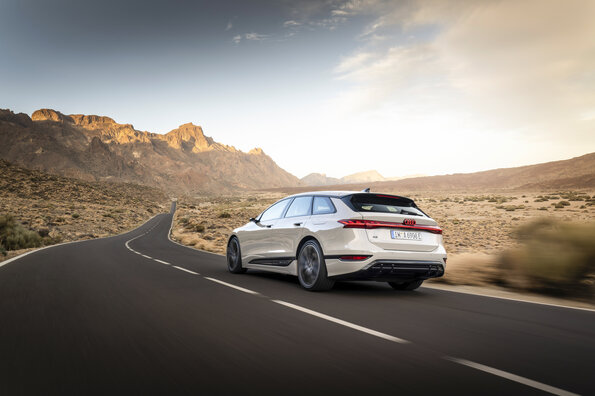
Bildnachweise: © Copyright AUDI AG, Ingolstadt (Deutschland)
The Audi A6 e-tron Avant is the fully electric counterpart to the classic A6 Avant and ushers in a new era of large premium estate cars at Audi. Built on the Premium Platform Electric (PPE) co-developed with Porsche, featuring 800-volt architecture, it charges at up to 270 kW at DC fast-charging stations and offers WLTP ranges of over 700 km thanks to the 100-kWh battery (94.4 kWh net). The drivetrain range extends from the efficient rear-wheel drive performance variant to the S6 e-tron with 517 PS and electric quattro all-wheel drive. The Avant complements the Sportback variant with a functional estate body type offering significantly more cargo volume, targeting customers who want to combine electric mobility with a classic business format. The A6 e-tron is produced at the Audi plant in Ingolstadt.
Specifications
| Body type | Electric estate, 5-door |
|---|---|
| Platform | PPE (Premium Platform Electric) |
| Drivetrain | Rear-wheel drive or all-wheel drive (quattro) |
| Powertrain | 1–2 Permanently Excited Synchronous Motors |
| Power | 285–517 PS (S6 e-tron) |
| 0–100 km/h | 3.9–6.7 s |
| Top speed | 210–240 km/h |
| Battery capacity (net) | 75,8 / 94,4 kWh |
| Range (WLTP) | up to 720 km |
| DC Charging Power | up to 270 kW |
| AC Charging Power | 11 kW (optional 22 kW) |
| Length | 4.928 mm |
| Width | 1.923 mm |
| Height | 1.478 mm |
| Trunk | 502–1.422 l |
| Price from | 69.800 EUR |
Highlights
- 800-volt architecture with up to 270 kW DC fast charging
- Up to 720 km WLTP range (performance variant)
- S6 e-tron with 517 PS, Boost Launch Control and quattro all-wheel drive
- Digital stage with panoramic display and passenger screen
- Active air suspension and all-wheel steering for superior agility
- Second e-tron generation with over 40% improved efficiency compared to predecessor